
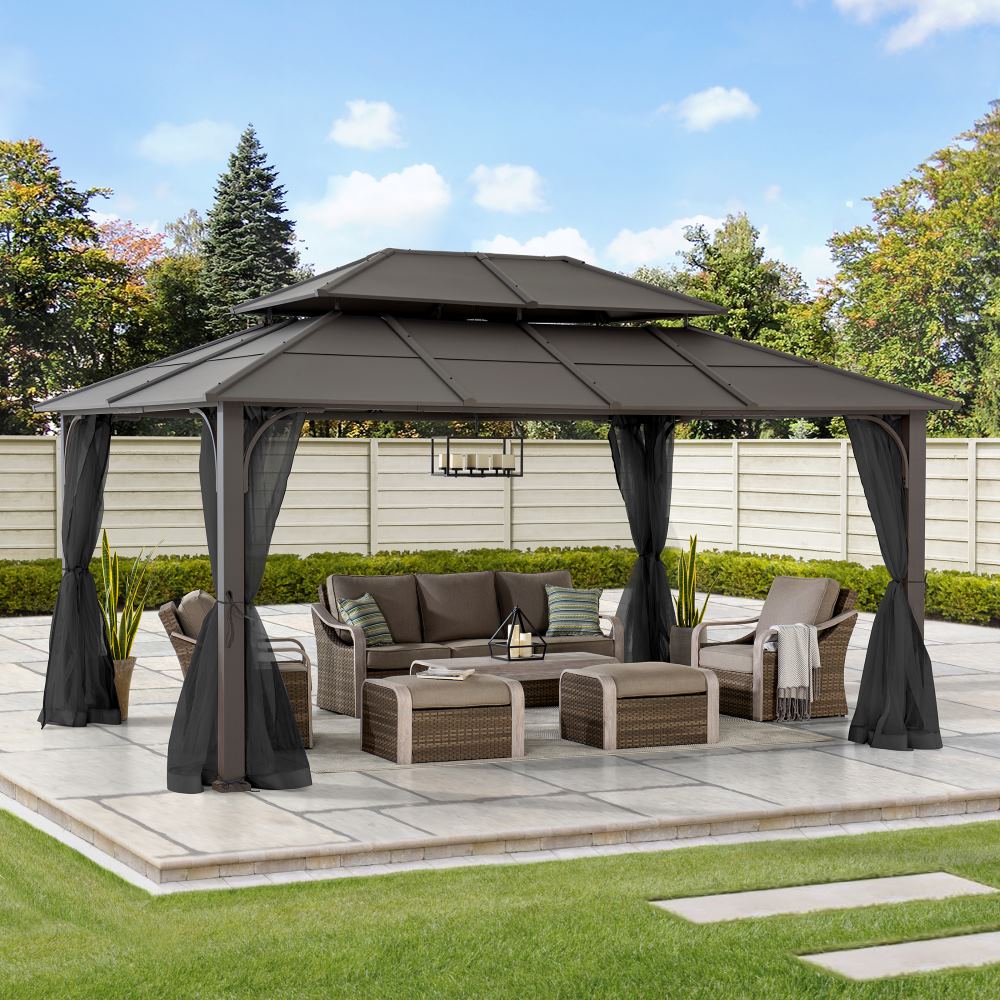
From shade needs to setup plans: reviewing Sunjoy Outdoor Gazebos via the footprint available for a gazebo for poolside spaces
When planning around the footprint available for a gazebo for poolside spaces, start with how the area will be used rather than with a preferred style. SUNJOY outdoor gazebos can be considered as part of that early comparison, but the collection page should be read as a starting point. A poolside shelter may need to accommodate chairs, circulation, shade-seeking guests, or other items already occupying the space. Those needs affect the usable footprint, even before you compare roof and material labels.

Define the space before comparing listings
Sketch the area in practical terms. Note the space where people will sit, the route they will use to enter and leave, and any fixed features that cannot move. Around a pool, this may include the pool edge, steps, fencing, planting beds, outdoor equipment, or a paved border. The same approach works for a patio or garden: identify the activity first, then consider how much room a shelter can occupy without making the rest of the area difficult to use.
It is useful to separate the shelter’s stated footprint from the clearance the surrounding activity needs. A listing may present an overall size, but that number does not by itself explain how comfortably people can move around the structure. Treat the listed size as one comparison point. Then ask whether the intended furniture, people, and access routes can coexist within the available setting. This is a planning framework, not a claim about any particular model.
Read the collection page as a set of comparison fields
The captured outdoor gazebo collection lists hard-top, soft-top, and wood gazebo categories. It also displays product listings with sizes and material or roof labels. These fields provide a useful way to narrow a broad search, especially when the outdoor area has a clear purpose. For example, a shopper can first identify listings that appear relevant to the desired size, then compare the stated roof or material label without assuming that the label answers every installation question.
The page also exposes filters for overall size, roof type, column dimensions, product shape, material, price, and product type. Used in that order, these filters can turn a general browsing session into a more disciplined review. Begin with the space-related fields. Next consider the construction or appearance criteria that matter for the setting. Leave price comparisons until the shortlist reflects the intended use, because a lower or higher listed price does not by itself explain whether a model suits the space.
| Page-listed field or example | Practical use in the comparison |
|---|---|
| Hard-top, soft-top, and wood gazebo categories, plus size and material or roof labels | Use these as initial categories for narrowing a shortlist; do not treat a category as a complete model assessment. |
| Overall size, roof type, column dimensions, product shape, material, price, and product type filters | Review space-related and design-related fields systematically before comparing shortlisted listings. |
| Cedar, PC-roof, aluminum, solar, poolside, and pergola examples | Use displayed examples as comparison prompts only; they do not guarantee current availability or that every option is a gazebo. |
Compare options without filling in unstated details
When reviewing backyard gazebo options, keep three questions separate. First, does the listed size appear relevant to the available area? Second, does the roof, material, shape, or column information match the setting you are trying to plan? Third, what does the page actually leave unresolved for the selected model? This separation helps prevent a category label from becoming an assumption about comfort, weather performance, assembly, or long-term suitability.
A concrete page-level anchor is the collection’s range of displayed examples. The page shows examples including cedar, PC-roof, aluminum, solar, poolside, and pergola products. That variety can help a shopper notice different directions for a comparison, but the examples shown are not a guarantee of current availability or that every option is a gazebo. Use them as signals for further review, not as a promise about the complete selection or a particular product’s capabilities.
Turn the shortlist into a model-specific review
Once one or more listings seem to fit the available space, return to the selected product information and record only details stated for that model. Compare its displayed overall size with the area you measured. Note the roof and material description, and look for the column dimensions or product shape if those fields affect how the structure would sit in the space. If the collection view and the individual listing present different levels of detail, keep the more specific model information separate from the collection-wide categories.
It also helps to write down the assumptions you are deliberately not making. A material label is not automatically a performance guarantee. A poolside example is not automatically proof that every model suits every pool layout. A product category is not automatically a statement about installation conditions. Framing these as open questions keeps the decision grounded in the page evidence and in the physical constraints of the backyard.
A practical decision sequence
Use a short sequence before choosing:
- Measure the area that the structure could occupy and mark the activity that must remain around it.
- Use the collection’s overall-size, roof-type, material, shape, and product-type fields to create a focused shortlist.
- Compare the shortlisted listings with the intended use, not with a category name alone.
- Review the selected model’s own details for the size, roof, material, and column information that is actually stated.
- Keep availability, suitability, and performance conclusions limited to what the relevant page supports.
This sequence is deliberately modest. It does not rank one construction type above another, and it does not assume that a larger structure is better for a poolside setting. Its purpose is to connect the available footprint with the activity, then use the page’s fields to make the comparison more precise.
Make the next step concrete
For a backyard update, the strongest starting point is a simple space plan followed by a careful page review. Decide what must fit, identify the movement that must remain possible, and use the collection filters to reduce the number of listings you need to inspect. Then treat each size, roof, material, shape, and column entry as a specific piece of information rather than as a complete answer about the finished outdoor area. That approach gives SUNJOY a clear role in the process: a source of listed gazebo categories and product examples to compare against the space you actually have.
