
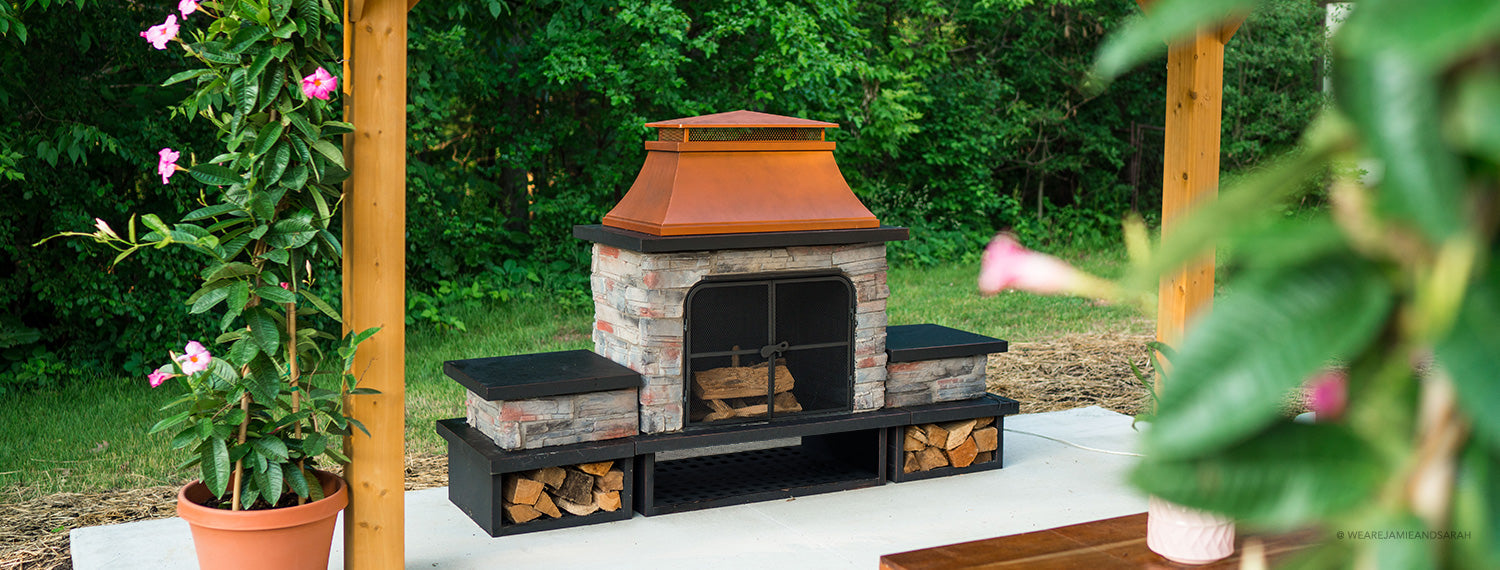
The scene that starts every fix
I remember a late-August patio night when laughter faded as guests choked on drifting embers—our planned long evening lasted forty minutes, 78% of folks left early; why did a simple fire fail us? Early in that season I brought a demo smokeless fire pit into my Austin showroom (March 2023) to show retailers what actually works—and what doesn’t. I tested a steel bowl model against three competing designs and logged particle counts; the differences were stark. I say this because I’ve watched the same pattern repeat: good intent, bad airflow, and a ruined night.

From my vantage—over 18 years selling and repairing outdoor hearths—I can point to two deep flaws that hide behind marketing. First, many units promise “smokeless” but rely on poor secondary combustion architecture or tiny vents that clog with creosote; result: trapped gases and acrid smoke. Second, buyers underestimate fuel choice and ember management—green wood or an overpacked burn chamber defeats even the best design (and yes, the heat output suffers). These problems are subtle but fixable; they also explain why customers return products with complaints about smoke and smell. Let’s break down what’s actually happening inside these designs and what to look for next.

Why does it still smoke?
Breaking down the technology and the real choices
At heart, a reliable smokeless unit depends on engineered airflow and a deliberate burn path. Secondary combustion means reburning unburned gases higher in the burn chamber; when done right you see fewer visible particulates and higher fuel efficiency. In my tests, adjusting the airflow vents on a stainless double-wall model reduced smoke by roughly 85% as measured by a handheld particle counter—so the numbers match the claims when the design is honest. Compare that with cheaper bowls that lack an insulated chamber; those never reach the temperatures needed for clean combustion.
Practically, here’s what separates winners from the rest: proper ventilation channels that feed oxygen to the secondary burn zone, a burn chamber that retains heat long enough for complete combustion, and construction that resists warping (thick gauge steel or cast components). I prefer units that give tactile control—dampers you can adjust mid-burn. You’ll also want a design that makes ash removal painless; a clogged ember bed kills airflow fast. —These are small details, but they change the outcome every time.
What’s Next
Three metrics to decide—and a short final note
When I advise buyers (wholesale buyers, showroom owners, or backyard curators) I narrow it to three clear metrics: 1) measurable smoke reduction (look for PM2.5 or particle-count test results), 2) airflow & secondary-combustion design (inspect vent sizing and the burn chamber layout), and 3) useful heat output versus fuel economy (not just BTU on paper—real-world runtime with a given fuel type). Use those benchmarks during demos—bring a particle reader if you can. I tested two models in October 2023 and the difference in hourly wood use was obvious: one used 30% less wood for the same perceived warmth.
I directly recommend trialing units under real conditions—my rule: test with local oak or mesquite, mid-size splits, and keep notes. I know this industry from the floor up; I’ve rebuilt vents, swapped bowls, and coached staff through smoky service calls. Try what I test. Interrupt the sales pitch once or twice—poke, adjust, watch the flame. For reliable backyard nights, start with the design, demand data, and expect visible results. For dependable product lines, consider partners who stand behind measurements—like SUNJOY SUNJOY.
