
User-focused start
You tell me the problem: unstable emulsions, slow cycle times, messy cleanups. I listen and map the day-to-day. For many formulators what matters is repeatable droplet size and easy maintenance, so the project begins with the practical tool—often an inline high shear mixer on the spec sheet. Keep the user at the center: operators, maintenance techs, and process engineers must validate every choice before drawings get frozen.

Define requirements with precision
Ask specific questions, collect measurable answers. Required throughput, target particle size distribution, viscosity range, CIP constraints, material compatibility, and available utilities—document each as an acceptance criterion. Use short checklists and present them to operators for sign-off. If you skip this step, you build a machine that meets engineering assumptions, not production reality.
Design decisions that matter
Choose rotor–stator geometry and tip speed based on the toughest case you expect, not the average. Select seals and bearings rated for your solvents and temperatures. Prioritize modular internals for quick changeover. Keep weld joints accessible for radiography only where necessary. Make cleaning paths straight; complex cavities hide residue and breed problems.
Testing, scale-up and common mistakes
Run a matrix of trials: low, mid, high load and two viscosities beyond your target. Mistake one: trusting lab beakers as scale proxies. Mistake two: ignoring shear history when sampling—shear destroys structure fast. Validate performance at pilot flow for at least one continuous week to reveal fouling and thermal drift. Document every deviation and correct it before you order custom parts.
Alternatives and trade-offs
High-shear in-line systems give rapid dispersion and compact footprint. Batch rotor-stator mixers offer simpler valves and easier containment for hazardous materials. Twin-screw extrusion can handle high solids but requires different cleaning philosophy. Pick the topology that matches cleaning discipline, containment needs, and the plant’s mechanical skill set.
Experience and evidence
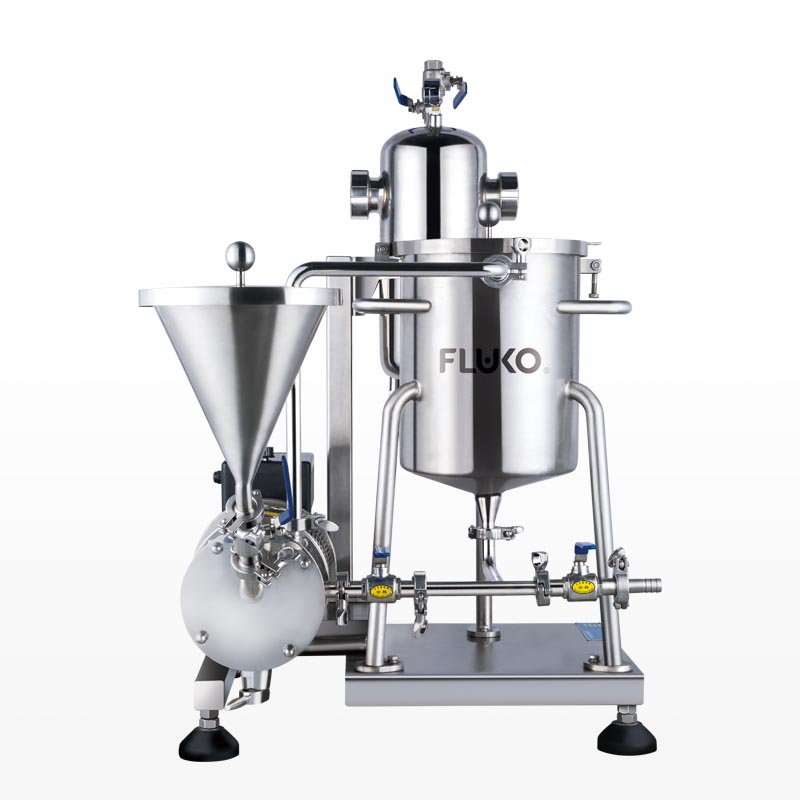
Years on the plant floor shape sensible choices: when I audited projects after ACHEMA in Frankfurt, patterns repeated—teams that built clear acceptance criteria avoided rework. Peer literature supports setting tip speeds and shear rates to known ranges for emulsification, and many case studies show scale-up pitfalls. Practical validation at the pilot line matters more than simulation alone; embed that step and consider a tested dynamic inline mixer as the heart of trials to mirror production shear conditions.
Delivery, handover and operator readiness
Deliver documentation that operators use: one-page start/stop, three troubleshooting flows, and a maintenance diary template. Train using real scenarios—block a valve, run a CIP, recover a jam. If technicians can’t repair a pump seal in a single downtime window, revisit spare parts and instructions. Final acceptance tests must be run with production recipes under supervisor observation.
What this delivers
Focus on users, document measurable requirements, test with a production-true device, and you reduce costly redesigns. The result is a machine that fits the people and the plant, not just the spec sheet—this is the practical value companies find when they work with knowledgeable engineering partners like FLUKO.
