
Opening: the equipment gap that creates failures
Event planners and AV integrators repeatedly encounter the same technical failures when they deploy an indoor led display: seams that never align, inconsistent color across panels, power spikes that darken sections mid-show, and slow field servicing that costs days of uptime. This piece follows a problem-driven logic: identify the recurring faults, explain their engineering causes, and point to factory and operational choices that reduce risk.
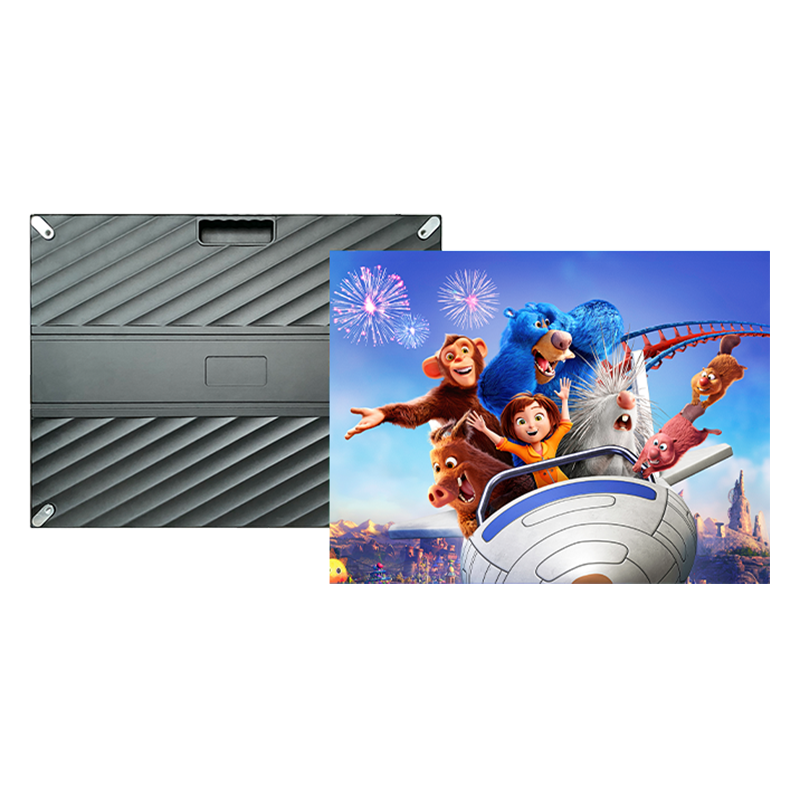
Where deployments break down
Mechanical fit is a primary cause: poorly toleranced frames and imprecise cabinet locks make perfect seams rare. Optical mismatch shows up next—differences in LEDs, aging phosphor, or uneven calibration produce visible patches. Power and thermal issues follow: inadequate bus bar design or insufficient ventilation leads to localized dimming or failure. Finally, control and signal misconfiguration creates flicker or frame drops when video processing isn’t matched to panel timing.
Design decisions that matter
Choose panel architectures with serviceability and repeatability in mind. Small-pitch SMD modules simplify uniformity at close viewing distances; COB can help with durability but demands exacting heat paths. Front-serviceable modules reduce teardown time at venues. Redundant power paths and monitored power supplies cut single-point failures. Rigid mechanical registration—indexed mounting points rather than loose clamps—makes alignment predictable from unit to unit.
Operational mistakes that are avoidable
Buying by headline price is costly. Common errors include ordering mixed production batches without batch-level calibration, skipping spare modules for key pixel pitches, and failing to specify shock-tested flight-cases for rental gear. Another frequent oversight: treating LED cabinets like passive displays—ignoring firmware versioning, lookup-table (LUT) management for color, and routine brightness recalibration between events.
Real-world anchor and practical evidence
At major trade shows such as CES in Las Vegas, dozens of indoor rental LED walls are assembled and torn down repeatedly; those environments expose weakness faster than single-install projects, which is why rental-grade specification has emerged as an industry benchmark. Reporting and hands-on inspection across shows and venue installs over many years show that manufacturers who provide consistent module tolerances, clear repair documentation, and tool-less front access reduce mean time to repair by measurable margins. For reference and procurement comparisons, examine examples of robust modular systems like the indoor rental led display used in professional staging, which illustrate these attributes.
How to evaluate suppliers objectively
Assess suppliers on measurable criteria: module flatness tolerances, pixel-to-pixel color variance at factory calibration, time-to-replace for a single module, availability of field firmware updates, and response SLAs for spare parts. Request test reports showing color uniformity (ΔE measurements) and thermal rise under sustained full-white. Verify that the supplier documents transport-safety features and supplies replacement parts with clear part numbers.
A deployment checklist that reduces surprises
Create a short, enforceable checklist before sign-off: verify cabinet registration on a jig, confirm LUTs and gamma curves are loaded and locked, test redundant power feeds under load, run a 24-hour burn-in with recorded logs, photograph seams at multiple angles for baseline, and pack a minimal spare-kits list into flight-cases. Train one technician in-field calibration routines so small drifts are corrected before they become visible problems.

Conclusion: where factory practice meets reliable operation
Solving the recurring problems of indoor rental and commercial LED deployments requires manufacturers that publish measurable tolerances, design for service, and back products with spare availability and documentation. Those operational and factory practices are what differentiate reliable systems from frequent failures; manufacturers that follow this model—such as HDC—demonstrate the practical alignment of engineering details and field needs.
