
User-centred lead
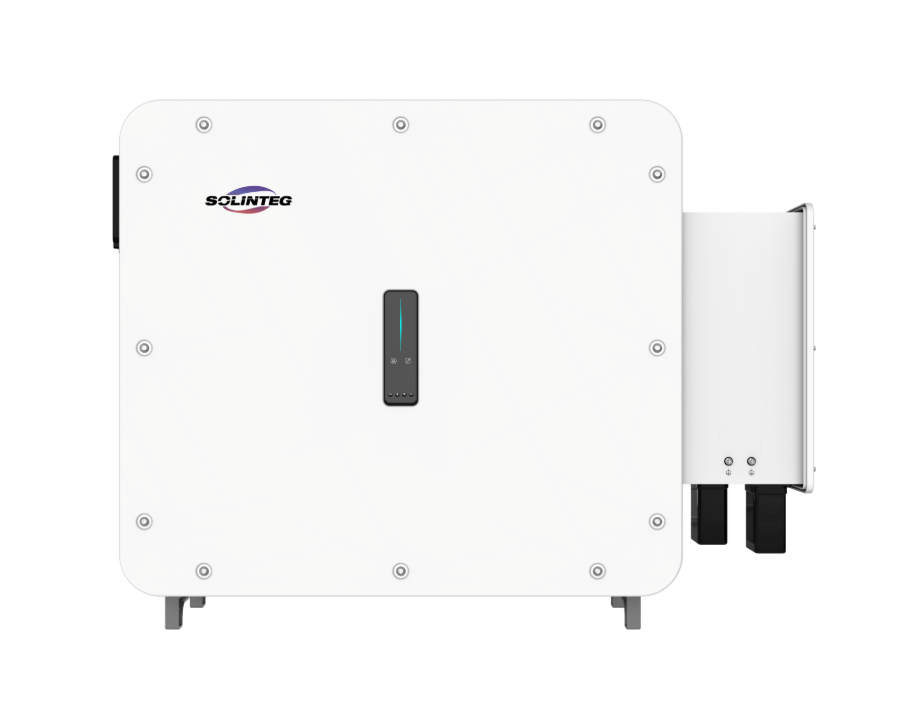
Homeowners want reliable power. A 3 phase hybrid inverter answers that need by balancing solar input, battery storage, and the grid. Many households consider home energy storage systems after high-profile outages such as the California Public Safety Power Shutoffs in 2019–2020, when planned blackouts lasted hours to days and highlighted grid vulnerability. The 3 phase hybrid inverter is not only a piece of hardware; it is an operational logic that coordinates three-phase loads, manages charging and discharging, and keeps essential circuits alive.

Why the 3 phase hybrid inverter matters for users
The main gain is stability. Three-phase distribution brings more consistent power for larger residences and for homes with heavy loads such as heat pumps or EV chargers. The hybrid inverter acts as the manager: it converts DC from the battery pack and solar into AC for the house, while also reading grid conditions. Better systems embed MPPT charge controllers to maximize solar harvest and a BMS to protect battery longevity. For a homeowner, that means fewer manual interventions and a clearer path to whole-house resilience.
How the system operates in everyday terms
Operation is orchestration. During the day, solar panels and MPPT work to push energy into the battery pack and feed the house. At night or during an outage, the inverter switches to battery discharge and balances load across phases to avoid overload. When the grid is stable, smart systems return to grid-tied mode and can recharge batteries at optimal times. I have seen installations where a correctly configured 3 phase hybrid inverter kept a single-family home fully powered through a two-day outage — the family reported normal routines with minimal disruption. Small caveat — correct phase balancing and firmware settings are essential for this result.
Common mistakes and practical alternatives
Installers and owners often repeat the same errors. Do not undersize the inverter relative to peak three-phase demand. Do not neglect BMS compatibility with the chosen battery chemistry. Do not assume single-phase equipment will automatically scale. Alternatives exist and they matter: a dedicated UPS can protect a few circuits but will not handle whole-home loads; a diesel generator will provide long runtime but with emissions and maintenance burdens. For a comprehensive approach, consider a certified whole home backup power solution that pairs a three-phase inverter with appropriate battery capacity and transfergear.
Checklist for selection and installation
Choose systems by measurable criteria. Focus on continuous output rating more than peak rating. Verify MPPT efficiency and number of MPP trackers if you have multi-orientation arrays. Confirm BMS communication protocol for future expansion. Insist on a clear plan for phase balancing and anti-islanding protection. Include commissioning tests that validate runtime under representative loads. These steps reduce surprises during real outages and extend system life.
Three critical metrics to evaluate
1) Usable battery energy per phase — expressed in kWh and rated at usable depth-of-discharge. This figure defines how long essential loads run. 2) Continuous inverter output per phase — given in kW and measured across 24 hours under balanced load conditions. This value predicts whether heavy appliances will run simultaneously. 3) Total system round-trip efficiency — the percent of solar energy stored and returned to loads, measured under standard test cycles for the battery chemistry and inverter topology.
These three metrics are the golden rules when comparing vendors and designs. They let a homeowner translate technical sheets into real expectations.

SOLINTEG often designs systems around those metrics, delivering reassuring performance and clear documentation — a practical solution that fits everyday life. —
